

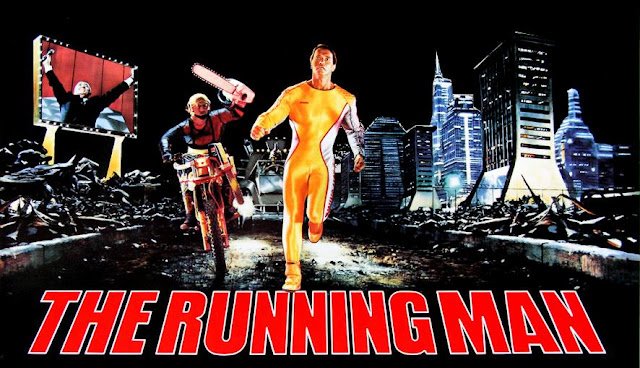
In the vast, neon-drenched landscape of 1980s sci-fi action, one film stands out not just for its muscular star power or explosive set pieces, but for its chillingly prescient vision of our media-saturated present. That film is Paul Michael Glaser’s The Running Man 1987, a chaotic, gritty, and darkly satirical adaptation of a Stephen King (Richard Bachman) story. More than just an Arnold Schwarzenegger vehicle, this cult classic is a dystopian time capsule that feels less like fiction and more like a fractured mirror held up to our 21st-century reality.
The Premise of The Running Man 1987
The year is 2017. America has become a totalitarian police state following a global economic collapse. To pacify the masses, the government broadcasts the nation’s most popular show: “The Running Man,” a sadistic game show where convicted “criminals” are hunted by celebrity executioners called “Stalkers.”
Enter Ben Richards (Schwarzenegger), a framed former cop forced onto the show by its unctuous, grinning host, Damon Killian (a brilliant Richard Dawson). What follows is a barrage of iconic one-liners, brutal combat, and Richards’ fight to expose the truth to a manipulated public.
Why The Running Man 1987 Was Ahead of Its Time
While the surface offers pure Arnold action, the enduring power of The Running Man 1987 lies in its savage satire.
1. The Reality TV Prophecy. In 1987, the concept of reality TV was in its infancy. The Running Man 1987 imagined its logical, terrifying extreme: a show where public execution is repackaged as prime-time entertainment for social control. Today, in our world of humiliation-based content, social media spectacle, and survival-competition overload, its vision feels less like fantasy and more like a darkly exaggerated reflection.
2. The Host as Icon: Richard Dawson’s Masterstroke. Casting real-life Family Feud host Richard Dawson as Killian was a stroke of genius. Dawson didn’t need to act sinister; he amplified his own charming, manipulative persona to show the power behind the smile. Killian is a ratings-obsessed producer and state propagandist, embodying media complicity. In the age of charismatic, agenda-driven media personalities, his legacy is undeniable.
3. The Battle for Narrative. A central plot point in The Running Man 1987 is a doctored video feed used to frame the hero. The regime is propped up by lies broadcast as news. This battle for the “official story” feels painfully contemporary in our era of deepfakes, disinformation, and weaponized social media.
The Gritty Aesthetic of a Dated Future
Unlike sleek dystopias, the world of The Running Man 1987 is pure 1980s grunge futurism: concrete brutalism, bulky CRT monitors, and fashion defined by spandex and shoulder pads. This dated, analog decay is now a huge part of its charm, grounding its satire in a specific, gritty texture that glossy reboots could never replicate.
The Running Man 1987 in 2024: A Cautionary Tale That Arrived
To watch The Running Man 1987 today is to experience a unique dissonance. You cheer for Arnie’s brute-force heroism and chuckle at the retro tech, but you feel a shudder as the satire lands with unnerving accuracy. We may not have gladiators named Buzzsaw or Dynamo, but we have created digital arenas where reputations are torn apart for engagement. We are both the pacified audience and the potential runners.
