

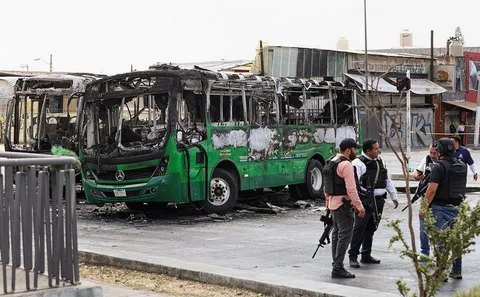
When discussing modern organized crime in Mexico, one name consistently dominates headlines: El Mencho. Known for his calculated brutality and rapid expansion of criminal influence, El Mencho has become one of the most powerful and feared drug lords in the world. As the leader of the Jalisco New Generation Cartel (CJNG), he has reshaped the landscape of drug trafficking, violence, and organized crime across Mexico and beyond.
This article explores who El Mencho is, how he rose to power, the structure of his cartel, and why he remains one of the most wanted fugitives globally.
Who Is El Mencho?
El Mencho is the alias of Nemesio Oseguera Cervantes, born on July 17, 1966, in Michoacán, Mexico. His nickname roughly translates to “The Shorty,” though there is little small about his influence. He rose from humble beginnings to become the head of one of Mexico’s most violent and rapidly expanding criminal organizations.
Before becoming a cartel leader, Oseguera Cervantes reportedly worked in agriculture and later spent time in the United States. After returning to Mexico, he became involved in organized crime, initially working with other criminal groups before forming his own power base.
The Rise of the Jalisco New Generation Cartel (CJNG)
The Jalisco New Generation Cartel emerged around 2010 after the decline of older cartels. Under El Mencho’s leadership, CJNG quickly grew into one of Mexico’s most dominant criminal enterprises.
Key Factors Behind CJNG’s Growth:
- Aggressive Expansion Tactics – CJNG used extreme violence to eliminate rivals.
- Advanced Weaponry – The cartel displayed military-grade weapons in propaganda videos.
- Diversified Operations – Beyond drugs, CJNG expanded into extortion, fuel theft, and human trafficking.
- Strategic Alliances – They formed temporary alliances to strengthen territory control.
Unlike older cartels that relied heavily on secrecy, CJNG often publicly displayed its strength through videos showcasing convoys of armored vehicles and heavily armed members.
El Mencho’s Criminal Operations
Under El Mencho’s command, CJNG became a major supplier of:
- Methamphetamine
- Cocaine
- Heroin
- Fentanyl
The cartel developed strong distribution networks into the United States, Europe, and Asia. Law enforcement agencies consider CJNG one of the primary traffickers of synthetic drugs, particularly fentanyl, into North America.
The U.S. government has placed multi-million-dollar rewards for information leading to El Mencho’s capture, highlighting the global scale of his operations.
Violence and Reputation
El Mencho’s reputation is closely tied to extreme violence. CJNG is known for:
- Public executions
- Attacks on police and military forces
- Use of explosive drones
- Armored vehicles known as “monster trucks”
In 2015, CJNG shot down a Mexican military helicopter during a security operation—an unprecedented display of power that signaled the cartel’s growing military capabilities.
Such acts of violence have solidified El Mencho’s image as one of the most ruthless cartel leaders in recent history.
Most Wanted Status
El Mencho is among the most wanted fugitives in the world. The U.S. Drug Enforcement Administration (DEA) has listed him as a top priority target. Authorities accuse him of:
- Drug trafficking conspiracy
- Organized crime
- Money laundering
- Firearms offenses
Despite numerous operations targeting CJNG leadership, El Mencho has managed to evade capture for years, adding to his mystique and notoriety.
Family and Inner Circle
Like many cartel leaders, El Mencho has relied on family members to maintain loyalty within his organization. Several of his relatives have been arrested, including his son, who was accused of playing a significant role in CJNG operations.
However, the cartel’s structure remains resilient, demonstrating its strong organizational hierarchy and financial resources.
Impact on Mexico
The rise of El Mencho and CJNG has intensified violence in multiple Mexican states, including:
- Jalisco
- Michoacán
- Guanajuato
- Veracruz
Clashes between CJNG and rival groups have resulted in thousands of deaths over the past decade. Communities caught between warring factions often suffer displacement, economic instability, and fear.
Mexico’s government has launched major security initiatives to dismantle CJNG, but the cartel’s decentralized operations make it difficult to eliminate entirely.
Comparison to Other Cartel Leaders
El Mencho is frequently compared to infamous figures like:
- Joaquín El Chapo Guzmán
- Ismael El Mayo Zambada
While El Chapo gained global fame due to dramatic prison escapes, El Mencho has maintained a lower public profile. However, analysts argue that CJNG’s rapid territorial growth may make it even more powerful than earlier cartels at their peak.
Why El Mencho Remains Elusive
Several factors contribute to El Mencho’s continued evasion of authorities:
- Use of rural hideouts
- Rotating security teams
- Advanced communication methods
- Corruption networks
His organization’s ability to adapt quickly to law enforcement pressure has made him one of the most difficult cartel leaders to capture.
Global Implications
The influence of El Mencho extends far beyond Mexico. The international drug trade fuels:
- Addiction crises
- Money laundering networks
- Arms trafficking
- Cross-border violence
Governments across North America and Europe have increased cooperation to disrupt CJNG’s financial and supply chains. However, demand for narcotics continues to drive the cartel’s profitability.
The Future of CJNG
Experts debate whether CJNG’s power will continue to grow or eventually fragment like previous cartels. Criminal organizations often face internal splits, leadership disputes, and government crackdowns over time.
If El Mencho were captured, it could:
- Trigger internal power struggles
- Increase short-term violence
- Lead to cartel fragmentation
However, history shows that removing one leader does not necessarily end organized crime operations.
Conclusion
El Mencho, born Nemesio Oseguera Cervantes, has transformed the Jalisco New Generation Cartel into one of the most powerful criminal organizations in the world. His rise reflects the evolving nature of organized crime—marked by militarization, global networks, and diversified revenue streams.
While authorities continue efforts to capture him, El Mencho remains a symbol of the challenges facing Mexico and the international community in combating transnational drug trafficking. His story is not just about one man, but about the broader systems of power, violence, and demand that sustain global organized crime.
