

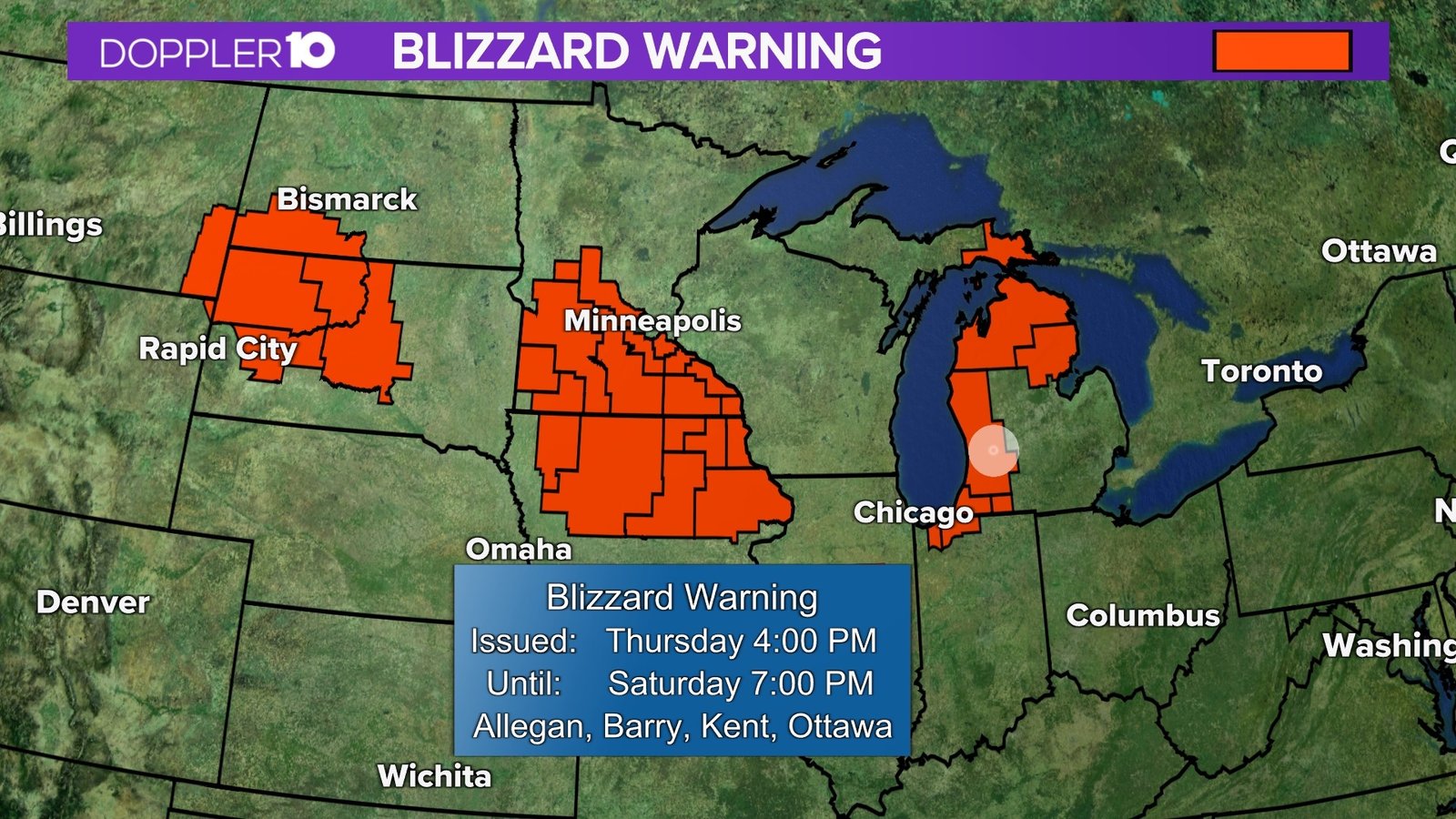
Every winter, Minnesotans know to expect snow and cold — but sometimes, conditions can escalate from a typical snowstorm to something far more dangerous: a blizzard. When the National Weather Service (NWS) issues a Blizzard Warning in Minnesota, it’s not something to ignore. This alert signals severe winter conditions that can disrupt travel, power, and daily life across parts of the state.
Let’s break down what a blizzard warning is, why Minnesota gets them, what impacts they bring, and how you can stay safe when one is issued.
🎯 What is a Blizzard Warning?
According to the NWS, a blizzard warning is issued when:
- Heavy snowfall is expected combined with strong winds (sustained winds or frequent gusts of 35 mph or more),
- Visibility drops to 1/4 mile or less due to blowing snow,
- These conditions are forecast to persist for at least 3 hours.
In simple terms: a blizzard is far more than just snow falling — it’s snow driven by wind that makes travel extremely dangerous and reduces visibility to nearly zero.
🌨️ Why Minnesota? Geography Meets Weather
Minnesota’s geography plays a big role in why the state sees blizzard warnings:
- Open Plains in western and southern Minnesota allow wind to blow snow without obstacles, creating whiteout conditions.
- Cold Arctic air collides with moisture from the Gulf of Mexico or Pacific systems, producing heavy snowfall and wind.
- Winter storms track across the Northern Plains and Midwest, bringing snow and gusty winds together.
Recent years have shown multiple blizzard setups — from western Minnesota’s wide open fields to the North Shore near Lake Superior — proving that blizzard conditions can occur across the state.
❄️ Examples of Blizzard Warnings in MN
Here are a few real‑world instances of blizzard warnings affecting Minnesota:
📍 Northern Minnesota Blizzard (Feb 2026)
A powerful winter storm brought heavy snow and winds to northern Minnesota. The National Weather Service expanded the Blizzard Warning to areas like Duluth and the North Shore, where snow totals of 16‑24 inches and winds over 60 mph were expected — creating widespread whiteout conditions and hazardous travel.
📍 Western Minnesota Blizzard Conditions
In parts of western Minnesota, including cities near the North Dakota border like Fergus Falls and Moorhead, blizzard warnings were issued with advisories against travel due to blowing snow and strong winds.
📍 South Central Minnesota Blizzard Forecast
South central and southwest parts of the state have also seen blizzard warnings tied to snow combined with strong winds, significantly reducing visibilities and making travel treacherous.
These examples show that blizzard warnings can affect different regions of Minnesota, not just the northwest, depending on the storm track and wind patterns.
🚗 Impact of a Blizzard Warning in Minnesota
A blizzard warning doesn’t just mean cold and snow — it can disrupt everyday life in serious ways:
❄️ Hazardous Travel
- Roads quickly become snow‑covered and slippery.
- Visibility can drop to near zero — sometimes referred to as “whiteout conditions”.
- High winds cause snowdrifts that pile over roadways, blocking travel.
Even highways can become impassable, prompting state officials to advise no travel unless absolutely necessary.
⚡ Power Outages
Strong winds combined with heavy snow can bring down tree limbs and power lines, leading to outages — especially in rural and exposed areas.
🏘️ Stranded Vehicles
Motorists caught in blizzard conditions without preparation risk becoming stranded. That’s why travel advisories sometimes accompany blizzard warnings.
📉 School & Business Closures
During severe events, schools, workplaces, and services may close for safety reasons — especially if travel conditions are predicted to be dangerous.
🛡️ How to Prepare & Stay Safe
When a blizzard warning is issued, preparation is crucial. Here’s how to protect yourself:
🚗 Before You Travel
- Avoid travel unless absolutely necessary.
- If you must travel, check road conditions at 511mn.org or local DOT resources.
- Carry a winter survival kit in your vehicle — food, water, blankets, flashlight, extra clothing, and a fully charged phone.
- Let someone know your travel plans and expected arrival.
🏠 At Home
- Stock up on essentials (food, water, medicine) ahead of storms.
- Ensure you have flashlights and backup power sources — power outages can last hours or even days.
- Keep pets inside and check on neighbors, especially older residents.
📻 Stay Informed
- Monitor updates from the National Weather Service.
- Use NOAA Weather Radio alerts or smartphone weather alerts to stay aware of changing conditions.
Blizzard warnings aren’t just about snow — they’re about combining snow with conditions that significantly threaten life and safety if ignored.
📊 Blizzard vs. Other Winter Alerts
It helps to know how a blizzard warning differs from other winter weather alerts:
- Winter Storm Watch: Conditions are possible but not imminent.
- Winter Storm Warning: Hazardous winter weather (snow/ice) is occurring or about to occur.
- Blizzard Warning: Severe conditions with low visibility and strong winds are occurring or imminent.
- Winter Weather Advisory: Less severe — conditions may cause inconvenience but not as dangerous as a warning.
Understanding this hierarchy helps you respond appropriately when weather agencies send alerts.
🧠 Final Thoughts
Minnesota’s winters are iconic, but they can also be dangerous when blizzard conditions are on the horizon. A “Blizzard Warning MN” is a serious weather alert — one that demands attention and preparedness.
