

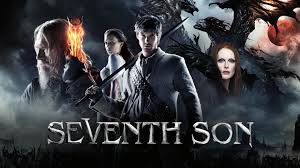
You’ve heard it in whispers of old tales, in the lyrics of folk songs, and in the pages of fantasy novels: The Seventh Son of a Seventh Son. The phrase itself feels enchanted, carrying a weight of prophecy, inherent power, and a destiny etched in the stars. But where did this compelling idea come from, and why does it continue to captivate us in modern stories?
This is more than just a quirky birth order; it’s one of the most enduring archetypes in folklore and fiction. Let’s unravel the mystery.
Roots in Folklore and Superstition
The concept stretches back through centuries of European folk belief, particularly in Celtic, English, and Appalachian traditions. Numbers have long held magical significance, and seven is the heavyweight champion of mystical digits—seven days of the week, seven classical planets, seven wonders, seven deadly sins.
To be a seventh son was already special, believed to be gifted with innate luck, healing abilities (the “touch”), or second sight. But to be the seventh son of a seventh son? That compounded the power exponentially. This individual was seen as a singularity of fate, born with:
- Prophecy and Vision: The ability to see the future, spirits, or hidden truths.
- Healing Hands: The power to cure illness, often called the “doctor’s touch.”
- Natural Magic: An affinity with the natural world, animals, and unseen forces.
- A Destiny Against Evil: Often destined to be a powerful hedge-witch, a cunning man, or a formidable opponent against supernatural darkness.
This wasn’t always a blessing. Such a marked child could also be viewed with fear, considered a witch, or seen as a magnet for supernatural trouble.
The Trope in Modern Storytelling
Modern authors and creators have seized this archetype and run with it, exploring its nuances across genres.
- In Orson Scott Card’s Seventh Son (the first book in The Tales of Alvin Maker series), it’s the foundation of an American frontier fantasy. Alvin Miller is born with incredible powers of creation and must learn to use them in a world where folk magic is real.
- In Patrick Rothfuss’s The Name of the Wind, the protagonist Kvothe, while not literally a seventh son, often plays with this legend. He performs a song about “The Seventh Son” that becomes a key part of his own burgeoning mythos, showing how the story itself is a power within the world.
- The trope fuels everything from Johnny Tremain’s revolutionary destiny to the blues mythology of musicians like Willie Dixon and Sting, who sang about the mystic prowess of the seventh son.
Why It Resonates: The Psychology of the Archetype
The “Seventh Son” endures because it speaks to deep human yearnings:
- Inherent Potential: It’s the idea that we might be born for something greater, that our very existence is special and has a purpose. It’s the ultimate “chosen one” narrative, but with a logic (numerology) that feels ancient and earned.
- The Power of the Marginal: The seventh son is often an underdog—the last, the unexpected, the one after the line of “normal” children. His power comes from his position on the edge, making him a relatable hero.
- A Connection to a Hidden World: The archetype promises that our world is more magical than it seems, and that certain people can act as bridges to that enchantment.
Beyond the Binary: A Modern Reimagining
Today, the trope is being thoughtfully expanded. What of the Seventh Daughter? Folklore sometimes mentions her as having powers of profound intuition or witchcraft. Contemporary writers are exploring these paths, questioning the male-centric origin and asking what form this compounded power might take in any child, regardless of gender.
The Seventh Son in You?
Perhaps the lasting magic of “The Seventh Son” is that it invites us to look for our own hidden lineage of power. It may not be in our birth order, but in our unique combination of experiences, our “compound interest” of learned skills, or our perspective from the margins.
It’s a story that says: There is a potential for magic in the culmination of things, in the last piece of a set, in the thing that is uniquely and completely itself.
So, the next time you hear the phrase—in a song, a book, or an old saying—listen closely. It’s not just a fairy tale. It’s an echo of our oldest belief: that destiny has a pattern, and sometimes, it waits for the seventh.
