

You’re about to make a big decision. You’ve analyzed the spreadsheets, made the pros and cons lists, and sought advice from everyone you trust. Logically, the path seems clear. But something in the pit of your stomach is pulling you in a completely different direction.
That nagging, inexplicable feeling is your intuition.
We’ve all experienced it—a sudden “knowing,” a quiet whisper, or a full-body sense of certainty (or dread) that defies logical explanation. We call it a “gut feeling” for a reason; it’s a physical sensation as much as a mental one. But in our data-driven, hyper-rational world, we’re often taught to ignore this inner voice. We dismiss it as unscientific, emotional, or flaky.
But what if intuition isn’t the opposite of logic? What if it’s a different kind of intelligence—one we can learn to trust and harness?
What Is Intuition, Really? (It’s Not Magic)
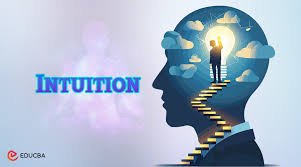
Intuition isn’t a mystical sixth sense reserved for psychics and prophets. Science suggests it’s your brain’s powerful, behind-the-scenes data processing system at work.
Think of your conscious mind as a sleek, modern computer working on a single, complex problem. Your subconscious mind, meanwhile, is a colossal supercomputer running trillions of calculations simultaneously, drawing from every experience, memory, and pattern you’ve ever encountered.
Intuition is the result of this supercomputer arriving at a conclusion without your conscious mind being aware of the steps. It’s your brain connecting dots you didn’t even know were there.
When you meet someone and feel an immediate sense of distrust, your intuition is likely picking up on subtle, non-verbal cues—a micro-expression, body language, or tone of voice—that your conscious mind hasn’t had time to register. When you suddenly know the solution to a problem while you’re in the shower, it’s your intuitive mind, free from conscious effort, linking disparate ideas together.
The Intuition vs. Logic Paradox: Do We Have to Choose?
This is the crucial point: Intuition and logic are not enemies; they are essential partners.
- Logic is the map. It’s the carefully charted route based on known landmarks, distances, and conditions. It’s reliable, verifiable, and safe.
- Intuition is the compass. It points you in a direction, even when the map is incomplete or the terrain has changed. It senses obstacles and opportunities that aren’t yet on the chart.
You wouldn’t embark on a journey through uncharted territory with only a compass and no map, nor would you rely solely on a map if you suspect the landscape has shifted. The most effective navigators use both.
How to Tune In and Trust Your Inner Voice
If intuition is a skill born from pattern recognition, then it’s a muscle we can strengthen. Here’s how to start listening.
1. Create Space for Silence.
Your intuition speaks in a whisper. It’s easily drowned out by the noise of notifications, to-do lists, and external opinions. Practices like meditation, mindful walking, or simply sitting in quiet contemplation are like turning down the volume on the world so you can hear your inner voice.
2. Pay Attention to Your Body.
Intuition is often a physical experience. Do you feel a tightening in your chest? A sense of expansion and lightness? A knot in your stomach? Start noticing the physical sensations that accompany your decisions and interactions. Your body often knows the truth long before your mind has caught up.
3. Distinguish Intuition from Fear.
This is the most common challenge. The voice of fear is loud, frantic, and catastrophic. It says, “What if I fail? What will they think? This is going to be a disaster!”
The voice of intuition is calm, quiet, and firm. It doesn’t scream; it simply knows. It might say, “This isn’t the right path,” or “Take this chance,” without the emotional charge of anxiety.
4. Start Small and Build a Track Record.
You don’t have to use your intuition to make a million-dollar decision tomorrow. Practice with low-stakes choices. Which route should I take to work? What book should I read next? Keep a mental note of when you followed your gut and what the outcome was. Building a history of small “wins” builds the confidence to trust it on bigger things.
5. Capture Your First Impressions.
When you meet someone new or are presented with an opportunity, notice your very first, unfiltered thought or feeling. Before your inner critic and analyzer get to work, what was your initial gut response? Journaling these first impressions can be a powerful way to see patterns over time.
The Power of a Honed Intuition
Learning to trust your intuition is about more than just making better decisions. It’s about living a more authentic, aligned, and confident life. It’s the tool that helps you choose the career that truly fulfills you, build relationships that nourish you, and navigate life’s uncertainties with a sense of inner guidance.
So the next time that quiet whisper arises, don’t dismiss it out of hand. Pause. Listen. Feel it in your body. Consult your logical map, by all means, but don’t forget to check your inner compass. It might just be pointing you toward your true north.
