

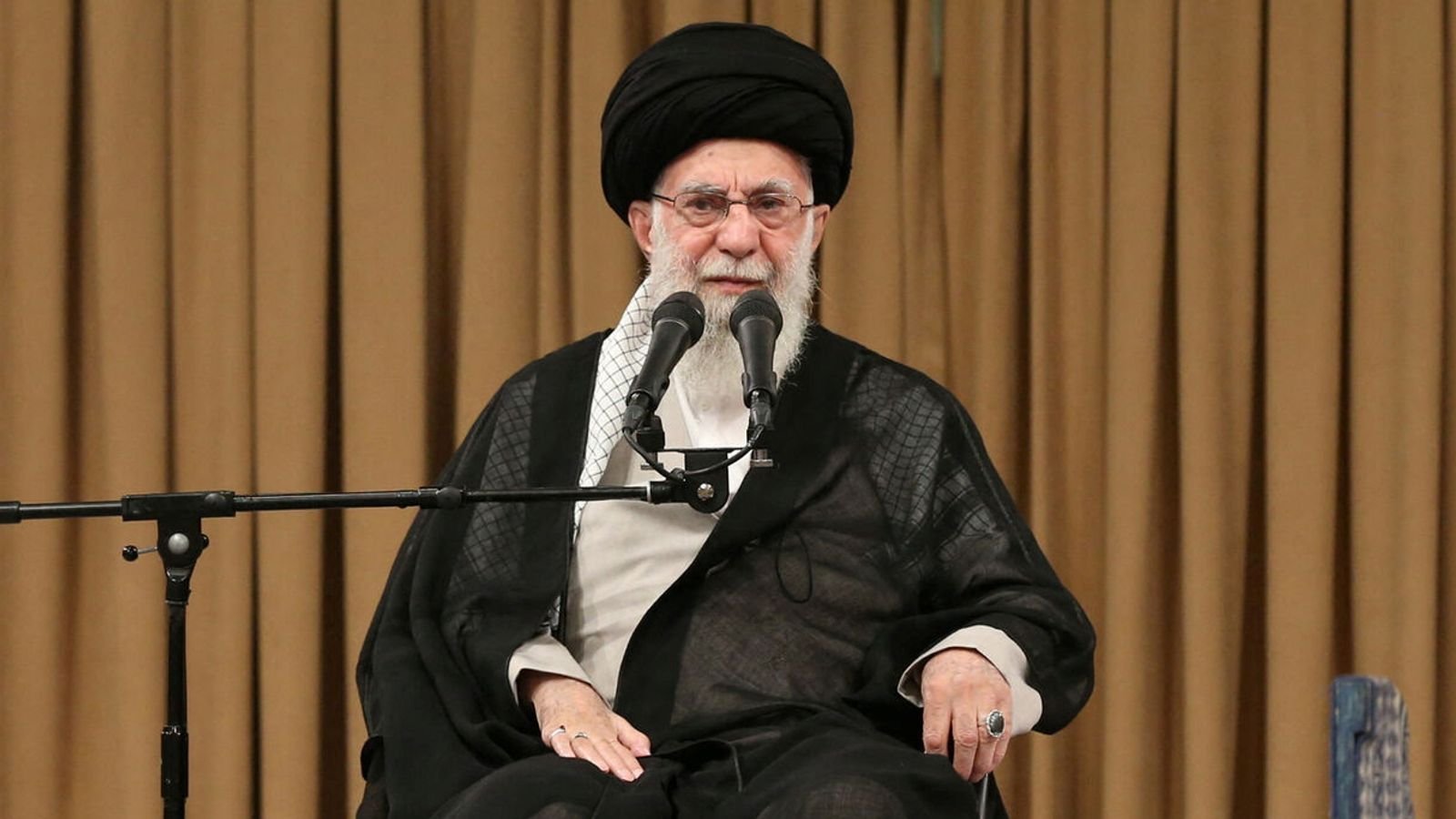
Ajatollah Ali Chamenei, more commonly spelled Ayatollah Ali Khamenei, is one of the most powerful and influential political and religious figures in the Middle East. Born on April 19, 1939, in Mashhad, he rose from a religious scholar to become the Supreme Leader of Iran, a position he has held since 1989. As Supreme Leader, he holds ultimate authority over the country’s political system, armed forces, judiciary, and state media. His leadership has shaped Iran’s domestic policies, foreign relations, and ideological direction for more than three decades, making him a central figure in contemporary Middle Eastern politics.
Khamenei succeeded Ruhollah Khomeini, the founder of the Islamic Republic, after Khomeini’s death in 1989. Before becoming Supreme Leader, Khamenei served as President of Iran from 1981 to 1989. His presidency came during a turbulent period, including the latter years of the Iran–Iraq War. Over time, he consolidated his authority within Iran’s unique political structure, which blends theocratic oversight with elected institutions. While Iran has a president and parliament elected by the people, the Supreme Leader holds the highest constitutional authority and can overrule other branches of government.
Early Life and Religious Education
Ali Khamenei was born into a religious family and began studying Islamic theology at a young age. He pursued advanced religious studies in the holy city of Qom, a major center of Shia scholarship. During the 1960s and 1970s, he became involved in revolutionary activities opposing the rule of Mohammad Reza Pahlavi, the last Shah of Iran. His activism led to multiple arrests and periods of exile under the Shah’s regime.
When the Iranian Revolution took place in 1979, Khamenei emerged as a close ally of Ayatollah Khomeini. After the revolution successfully overthrew the monarchy and established the Islamic Republic, Khamenei quickly rose through the ranks of the new political system. His revolutionary credentials and loyalty to Khomeini helped cement his position within the emerging leadership structure.
Presidency and Rise to Supreme Leader
In 1981, after the assassination of President Mohammad-Ali Rajai, Ali Khamenei was elected as Iran’s president. During his presidency, Iran was deeply engaged in the Iran–Iraq War (1980–1988), a devastating conflict that had significant economic and social consequences. Khamenei’s leadership during this period focused on national defense, ideological consolidation, and maintaining internal stability amid war pressures.
Following Khomeini’s death in 1989, Iran’s Assembly of Experts selected Khamenei as Supreme Leader. Although he did not initially hold the highest rank in Shia clerical hierarchy, constitutional changes and political support enabled his appointment. Since then, he has remained at the apex of Iran’s political system, guiding both domestic governance and foreign policy strategy.
Political Authority and Governance
As Supreme Leader, Khamenei oversees key institutions, including the Islamic Revolutionary Guard Corps (IRGC), the judiciary, and state broadcasting. He appoints the head of the judiciary, military commanders, and members of the Guardian Council, a powerful body that vets electoral candidates and legislation. This structure ensures that the Supreme Leader maintains significant influence over Iran’s political direction.
Domestically, Khamenei has emphasized resistance to Western cultural and political influence, promoting what he describes as Islamic values and revolutionary principles. His tenure has seen periods of political tension, including protests related to elections, economic hardship, and social freedoms. Critics argue that his leadership has limited political pluralism, while supporters maintain that he has preserved national sovereignty and ideological consistency.
Foreign Policy and Global Relations
Ali Khamenei’s foreign policy outlook has been characterized by skepticism toward the United States and strong support for regional allies. Relations between Iran and the United States have remained strained throughout his leadership, particularly over Iran’s nuclear program and regional activities. Sanctions imposed by Western countries have significantly impacted Iran’s economy.
The 2015 nuclear agreement, formally known as the Joint Comprehensive Plan of Action (JCPOA), was negotiated during his tenure. Although he allowed Iran’s government to engage in negotiations, he maintained a cautious stance toward Western intentions. After the United States withdrew from the agreement in 2018, tensions escalated once again. Khamenei has consistently advocated for a “resistance economy” aimed at reducing reliance on foreign powers.
Regionally, Iran under Khamenei has supported allied groups and governments in countries such as Syria, Lebanon, and Iraq. This strategy has expanded Iran’s influence across the Middle East but has also contributed to geopolitical rivalries with regional powers.
Ideological Vision and Religious Role
In addition to his political authority, Khamenei is a senior Shia cleric and serves as a marja (source of emulation) for some followers. His speeches often blend religious interpretation with political messaging, reinforcing the concept of “Velayat-e Faqih” (Guardianship of the Islamic Jurist), the foundational principle of Iran’s political system. This doctrine grants a senior cleric ultimate authority in governance to ensure that laws and policies align with Islamic principles.
Khamenei’s ideological vision emphasizes Islamic unity, resistance to perceived oppression, and independence from foreign dominance. He frequently addresses youth, intellectuals, and religious communities, seeking to shape Iran’s cultural and ideological trajectory.
Criticism and Support
Over his decades-long leadership, Ali Khamenei has faced both domestic and international criticism. Human rights organizations have raised concerns about freedom of expression, treatment of political dissidents, and restrictions on media. Economic challenges, including inflation and unemployment, have also fueled public dissatisfaction at various points.
At the same time, his supporters argue that he has maintained Iran’s territorial integrity, navigated complex regional conflicts, and ensured continuity within the Islamic Republic’s political framework. They credit him with sustaining the country’s strategic capabilities and preserving its revolutionary identity despite external pressures.
Legacy and Ongoing Influence
After more than three decades as Supreme Leader, Ali Khamenei remains a defining figure in Iran’s modern history. His leadership has spanned significant global and regional transformations, from the end of the Cold War to the evolving geopolitics of the Middle East. As debates continue over Iran’s political future, economic reforms, and international engagement, Khamenei’s role remains central.
Whether viewed as a steadfast guardian of revolutionary ideals or a controversial authority figure, Ajatollah Ali Chamenei’s impact on Iran and the broader region is undeniable. His decisions continue to shape not only the internal dynamics of the Islamic Republic but also the strategic balance of power across the Middle East.
