

There are films that entertain, and then there are films that define a genre, reshaping it so completely that every story that follows lives in its shadow. Michael Mann’s Heat 1995, is the latter. More than just a cops-and-robbers thriller, Heat is a meticulous, operatic study of obsession, professionalism, and the hollow spaces in the lives of driven men. Nearly three decades later, its influence isn’t just felt—it’s foundational.
The Alchemy of Opposites: Pacino & De Niro
The marketing screamed it: “De Niro and Pacino. Together for the first time.” While they shared screen time in The Godfather Part II, their characters never met. Heat built its entire mythos on their convergence. And Mann delivered not with a flashy duel of monologues, but with a quiet, iconic coffee shop scene.
Here, Detective Vincent Hanna (Al Pacino) and master thief Neil McCauley (Robert De Niro) meet not as enemies, but as respected professionals. They acknowledge their mirrored lives: both are brilliant, both are consumed by their “code,” and both have sacrificed every personal relationship at its altar. “Don’t let yourself get attached to anything you are not willing to walk out on in 30 seconds flat if you feel the heat around the corner,” McCauley advises. Hanna, meanwhile, is on his crumbling third marriage, because the “sense” of the job is the only thing that makes him feel alive. This scene isn’t about plot; it’s about theme. It elevates Heat from a crime story to a tragic character study.
The Symphony of Chaos: The Downtown Heist
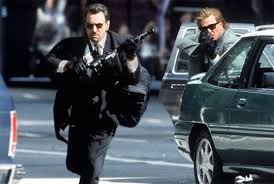
If the coffee shop is the film’s soul, the downtown Los Angeles shootout is its pounding, relentless heart. Rejecting the slick, sound-staged gunfights of its era, Mann employed military advisors and used raw, unsweetened audio of gunfire in downtown L.A. canyons. The result is a sequence of unprecedented, terrifying realism.
The sound is deafening, chaotic, and disorienting. There is no heroic score, just the concussion of rifle reports echoing off skyscrapers. This wasn’t just action; it was auditory authenticity that changed cinematic language. Directors from Christopher Nolan (The Dark Knight) to Kathryn Bigelow (Zero Dark Thirty) have cited this scene as a direct influence on their approach to grounded, visceral conflict.
A Tapestry of Lives Interrupted
Beyond the two titans, Heat presents a sprawling, novelistic portrait of a city and its damaged inhabitants. From Val Kilmer’s haunted, gambling Chris Shiherlis to Tom Sizemore’s steadfast Michael Cheritto, McCauley’s crew feels like a real, fractured family. On Hanna’s side, the detectives are weary, cynical, and bound by the grim details of their work.
The subplots aren’t distractions; they’re the fabric. Ashley Judd’s Charlene, Amy Brenneman’s Eady, and Diane Venora’s Justine Hanna represent the fragile civilian lives buckling under the weight of these men’s obsessions. We see the cost, in real time, making the climax not a simple victory of good over evil, but a devastating convergence of inescapable fates.
Why “Heat 1995” Still Burns Hot Today
Searching for “Heat 1995” today isn’t just an act of nostalgia. It’s a search for the blueprint.
- The Anti-Hero’s Code: Before The Sopranos or Breaking Bad complicated our moral allegiances, Heat presented its thief not as a monster, but as a man of discipline and honor, however warped. Modern television’s nuanced protagonists owe a debt to Neil McCauley.
- Technical Realism: The film’s devotion to authenticity—from the tools of the heist to the tactics of the police—set a new bar. It made audiences feel like insiders, a technique that defines prestige action filmmaking today.
- Thematic Depth: At its core, Heat is about the American male psyche: the pursuit of purpose, the isolation of expertise, and the tragic choice between being good at something and being good for someone. This emotional resonance is why it endures far longer than films with more twists or bigger explosions.
The Final Shot: A Legacy of Empty Hands
The film’s powerful conclusion—Hanna holding McCauley’s hand as he dies, having bested his double but gained nothing for his own empty life—is the ultimate statement. Both men followed their paths to the absolute end. One loses his life, the other loses any chance of having one.
Heat 1995 is more than a movie. It is a meticulously crafted world, a tone poem of glass, steel, and desperation. It’s the reason that lonely, blue-tinted aesthetic, the synth-driven score, and the whisper of professionalism in a criminal world are immediately recognizable shorthand for a certain kind of cinematic excellence.
